



Pakistan’s restive Balochistan province is reeling after a wave of coordinated militant attacks left nearly 50 people dead and saw security forces kill at least 145 militants in a fierce 40-hour battle, according to provincial officials. The violence, which erupted late Friday and continued into Saturday, marks one of the deadliest escalations in recent years—underscoring a disturbing shift in insurgent tactics, including the prominent use of female suicide bombers.
The Deadliest Day in Decades
The attacks, claimed by the banned Balochistan Liberation Army (BLA), targeted civilians, police stations, paramilitary facilities, and a high-security prison across the vast, resource-rich—but impoverished—province. Balochistan’s Chief Minister Sarfraz Bugti reported that 17 law enforcement personnel and 31 civilians were among those killed. The Pakistani military said 92 insurgents died in direct clashes on Saturday alone, with authorities tallying a total of 145 militants killed and at least 133 over the last 48 hours.
Security forces responded with massive crackdowns, sealing off areas of the provincial capital Quetta, where residents awoke to burnt-out vehicles, bullet-riddled police stations, and streets cordoned with yellow tape. The military’s rapid response was lauded by officials, but the sheer scale and coordination of these attacks—described by analysts as the deadliest day for militants in decades—caught many by surprise.
Female Suicide Bombers Take Center Stage
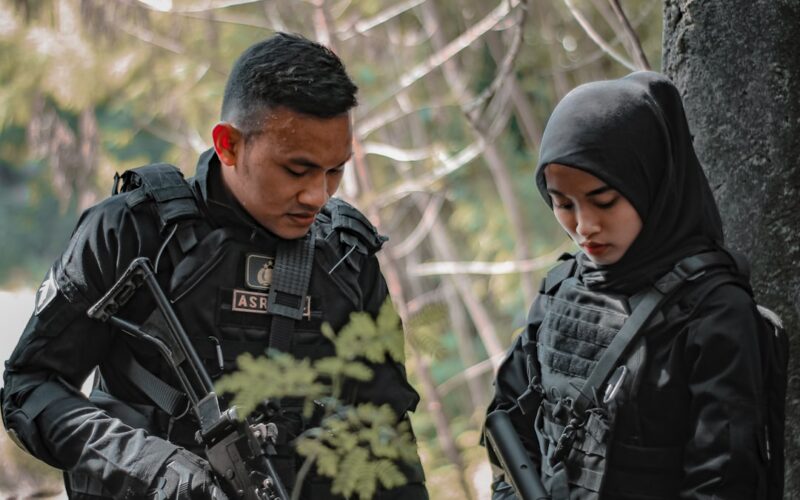
In a striking development, the BLA released images and video of two female suicide attackers, Asifa Mengal and Hawa Baloch, both in their early 20s and reportedly well-educated—an unprecedented move for the traditionally male-dominated insurgency. According to BLA statements, Mengal joined the group’s elite Majeed Brigade on her 21st birthday and volunteered for a suicide mission in January 2024. She was identified as the attacker who targeted the Inter-Services Intelligence (ISI) headquarters in Nushki. Hawa Baloch, featured in a propaganda video, called on Baloch women to unite with fighters, further amplifying the group’s messaging.
Pakistan’s Defence Minister Khawaja Asif confirmed that at least two of the attacks involved female perpetrators. Authorities say 11 of the 18 BLA fighters killed in the coordinated assault were women, highlighting an alarming trend: since 2022, Baloch insurgent groups have increasingly placed women at the forefront of suicide operations. The shift marks a radical departure from earlier years, when female involvement was mostly limited to support roles or peaceful protests.
The BLA’s use of female “fidayeens” is drawing regional and international concern—not only for the escalation of violence but for the propaganda value these attacks carry. The US, which designates the BLA as a terrorist organization, has condemned the attacks, with Charge d’Affaires Natalie Baker expressing solidarity with Pakistan.
The situation in Balochistan remains tense, as both sides brace for further violence. Pakistan accuses neighboring Afghanistan of harboring militants, while Islamabad and New Delhi continue to trade accusations over alleged support for separatists—a charge India denies. As the dust settles, Balochistan stands at the crossroads of a conflict that appears to be entering a far more dangerous—and inclusive—phase.