




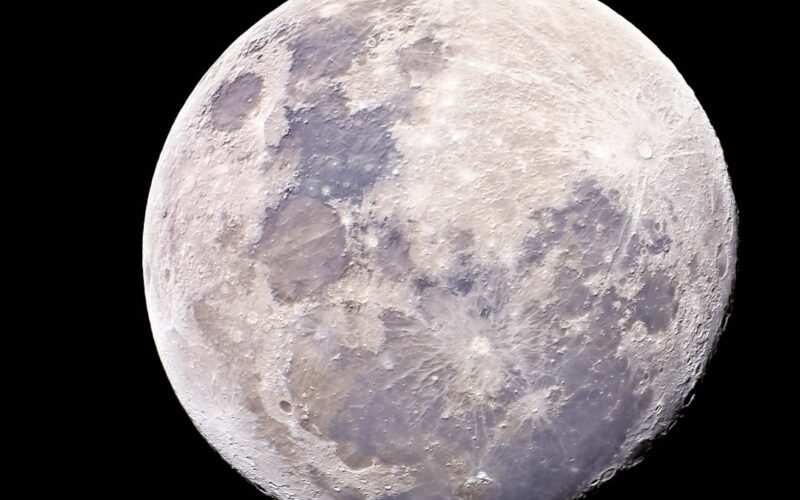
For the first time in over half a century, NASA astronauts are on their way around the Moon, marking a new era in human space exploration. The Artemis II mission, launched with much fanfare and a crowd of 400,000 spectators near the iconic NASA countdown clock, saw the Orion spacecraft and its four-person crew blast off for a 10-day journey that promises to reshape the future of lunar and deep-space missions.
The Big Burn and a Historic Path
On Thursday, April 2, 2026, the Artemis II crew executed the mission’s most critical maneuver: the trans-lunar injection burn. This engine firing set Orion on a “free return” trajectory—a clever path that, using only gravity, will loop the crew around the Moon and bring them back to Earth, with splashdown planned in the Pacific Ocean off San Diego. Notably, this is the first time since 1972’s Apollo 17 that astronauts have ventured so close to our lunar neighbor.
Unlike Apollo, the Artemis II crew won’t land or even orbit the Moon. Instead, they’ll whip around the lunar far side in a shakedown cruise, test-flying Orion and gathering vital data. “Artemis II is a test flight, and the test has just begun,” said Dr. Lori Glaze, NASA’s acting associate administrator for Exploration Systems Development. The mission is crucial for proving out new life support systems, like carbon dioxide filtering and temperature control, which so far have performed “exactly as we predicted, and in some cases, better,” according to NASA’s Mr. Hu.
Laying the Groundwork for Mars
While Artemis II is a test, its ambitions are anything but small. The mission builds on President Donald J. Trump’s vision to return humanity to the Moon and, eventually, send astronauts to Mars. Orion is flying with crew for the first time, its solar arrays deployed and collecting energy from the Sun as NASA gathers critical data on human health and spacecraft systems. Experiments like AVATAR, focused on crew observations, will inform future Moon and Mars missions.
With at least five Orion capsules already in development—and the potential for even more missions thanks to reusability—NASA is preparing for a rapid cadence of flights. According to Korth, an Orion program manager, “We have a lot of hardware in the pipeline,” signaling an ambitious future for lunar exploration.
For anyone eager to follow this historic journey, NASA is streaming the entire mission live on YouTube, X, and its website, with frequent updates and a dedicated news conference after each major milestone. As NASA Administrator Jared Isaacman put it, “Artemis II is the start of something bigger than any one mission”—and judging by the excitement so far, the world is ready to watch.