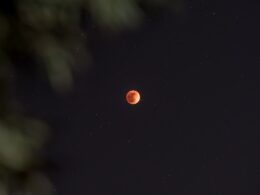



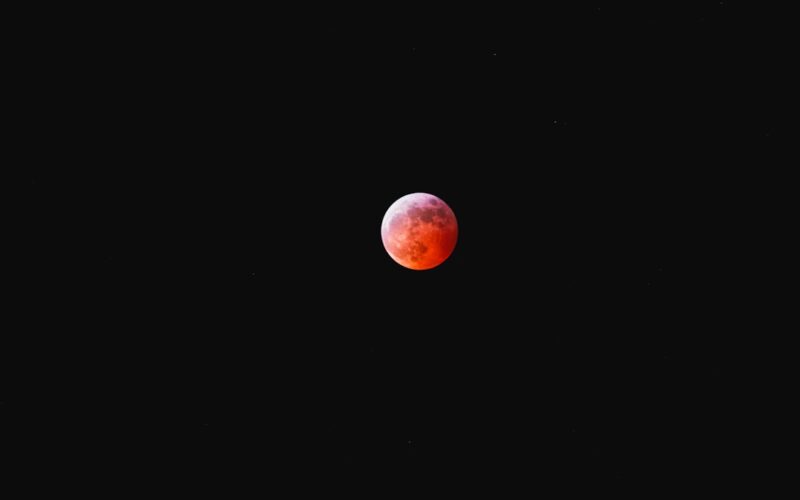
On March 3, 2026, people across the globe looked up in awe as the Moon underwent a dramatic transformation during the year’s first total lunar eclipse. Known as the “Blood Moon” for its striking red hue, the spectacle unfolded over nearly six hours, with totality—when the Moon was fully immersed in Earth’s shadow—lasting about 58 minutes.
The event kicked off at 2:14 PM IST, as the Moon entered Earth’s penumbral shadow. The partial eclipse began at 3:20 PM, and by 4:34 PM, the Moon was fully engulfed, glowing a deep, eerie red. Maximum eclipse occurred at 5:03 PM, before the total phase ended at 5:32 PM. Observers from New Orleans to Kolkata, Manila to New York City were treated to breathtaking views, with the so-called “Worm Moon” rising spectacularly behind landmarks like the Hudson Yards Edge in NYC.
Why Does the Moon Turn Red?
The science behind the Blood Moon is as captivating as the view itself. As Earth moved directly between the Sun and the Moon, our planet’s shadow fell across the lunar surface. But instead of going completely dark, the Moon took on a reddish glow. This happens because Earth’s atmosphere scatters shorter blue wavelengths of sunlight, while longer red wavelengths bend around the planet and bathe the Moon in a coppery light—a phenomenon known as Rayleigh scattering. It’s the same physics that gives sunsets their brilliant colors. Dust, pollution, or even volcanic ash in the atmosphere can deepen the color, making each Blood Moon unique.
NASA’s Marshall Space Flight Center in the US captured a mesmerizing timelapse of the eclipse above the Michoud Assembly Facility in New Orleans, highlighting the agency’s ongoing connection to lunar exploration. Meanwhile, astrophotographers around the world—from Anupam Naskar in Kolkata to Tran Huu Thinh in Ho Chi Minh City—shared stunning composite images, using everything from telescopes to smartphone cameras to document the phases of the eclipse.
Social Media Buzz and Scientific Excitement
The March 2026 Blood Moon quickly set social media abuzz, with #BloodMoon and #LunarEclipse trending as users posted photos and marveled at the celestial show. Astrophysicists, including NASA’s Dr. Maria Thompson, seized the moment to explain the science behind the event, turning curiosity into a learning opportunity for millions. “Every Blood Moon provides us an opportunity to educate the public about the complexities of celestial mechanics and atmospheric optics,” Dr. Thompson noted.
If you missed this eclipse, don’t worry—2026 is shaping up to be a year packed with notable astronomical events. For now, though, the world is still basking in the afterglow of a truly spectacular Blood Moon.