




Norway’s electric car revolution hit a new milestone in 2025, with fully electric vehicles accounting for a staggering 95.9% of all new car registrations, according to the Norwegian Road Traffic Information Council (OFV). The country registered an all-time high of 179,550 new passenger cars last year—a 40% jump from 2024—placing Norway firmly at the top of the global leaderboard for electric vehicle (EV) adoption.
The end-of-year figures tell an even more vivid story. In December alone, 98% of new cars sold were pure electric, underscoring a powerful surge as buyers rushed to lock in tax exemptions before a new $5,000 VAT on higher-priced EVs took effect at the start of 2026. Despite a gradual reduction in incentives—such as capping VAT exemptions for EVs priced above roughly $30,000—Norwegians showed little hesitation in embracing zero-emission cars. Meanwhile, duties on petrol and diesel vehicles continued to climb, further nudging consumers toward electric options.
Record-Breaking Sales and Tesla’s Dominance
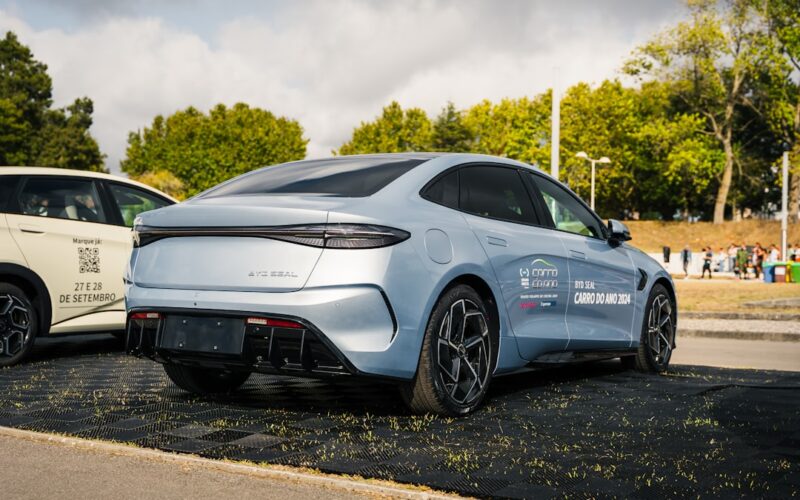
Tesla cemented its status as Norway’s top automotive brand for the fifth year in a row, capturing 19.1% of the market and registering 5,679 vehicles in December alone—an 89% jump from the year before. BYD, the Chinese automaker, also more than doubled its Norwegian market share in 2025, rising from 2.1% to 3.3%. Globally, BYD overtook Tesla in overall EV sales last year, but in Norway, Tesla remains the clear favorite.
Norway’s transition has been decades in the making. The government began supporting EVs as far back as the 1990s and set a bold target in 2017: end sales of new internal combustion engine (ICE) cars by 2025. While petrol and diesel models aren’t entirely gone—pure diesel cars made up just 1% of sales, and petrol vehicles only 0.3%, mostly for emergency and specialty uses—the country is closer than ever to saying goodbye to new fossil-fueled cars.
Still Work Ahead for the National Fleet
Despite this rapid transformation, two-thirds of vehicles on Norwegian roads still run on fossil fuels, according to OFV Director Geir Inge Stokke. Other segments are catching up: vans reached a 45.2% electric share, buses hit 56.3%, but trucks lag behind at 17.3% electric—with diesel still dominating at 73.2%.
Norway’s achievement stands in sharp contrast to the rest of Europe. The European Union’s EV adoption averaged just 17% in 2025, and the EU postponed its own combustion engine ban to 2035. Nordic neighbors Denmark and Sweden reached 50% and 37% EV shares, respectively, but none come close to Norway’s near-total transition—a testament to consistent policy and incentives, even in an oil-rich nation. As the rest of the continent debates, Norway has almost crossed the finish line.