




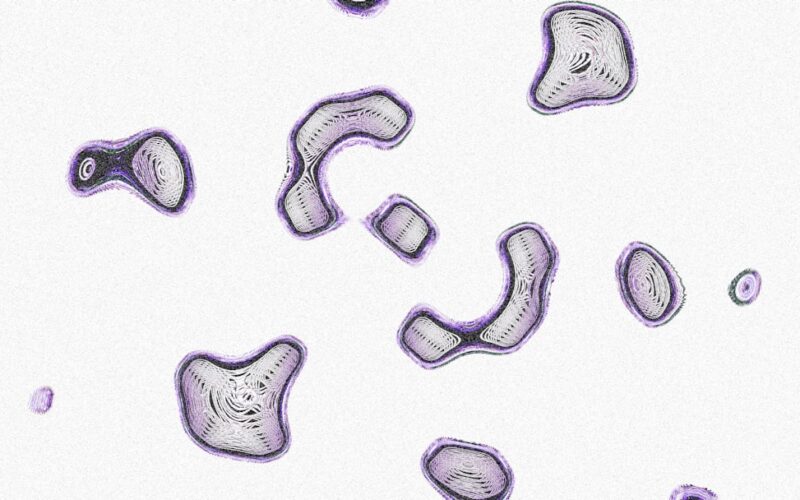
A team led by Associate Professors Kate Adamala and Aaron Engelhart at the University of Minnesota has pulled off a feat that pushes the boundaries of science and philosophy alike: they’ve created SpudCell, the first synthetic cell system constructed from scratch—no piggybacking on living cells, just pure chemistry. With a genome of only 90,000 base pairs (a far cry from the human genome’s 3 million), SpudCell is tiny, but its impact is anything but.
The project, detailed in a 190-page landmark paper, shows that the core hallmarks of life—growth, replication, and even a form of selection—can emerge from carefully engineered, non-living molecules. SpudCell can feed, grow in size, replicate its genome, and divide, though not in the way natural cells do. Instead of using a cytoskeleton as natural cells do, it splits under mechanical stress when proteins assemble at its surface, forming a new membrane. While its growth and replication are slow and energy-intensive, SpudCell can even demonstrate selection: when scientists introduced a genetic tweak that improved its ability to feed, those cells out-competed others over five generations.
The Threshold for Life
SpudCell doesn’t fully meet the definition of “alive” in the Darwinian sense—it can’t replicate itself for many generations or evolve independently, and it still relies on added machinery like feeder liposomes. But the research proves that life’s basic functions don’t require a mystical “spark.” “We’ve replicated in chemistry what only used to be possible in biology,” Adamala said, adding, “It’s likely the most exciting project I’ve ever worked on.” The cell’s genome is currently split across seven plasmids, a setup that will need further streamlining for stability.
Still, this is a huge leap for synthetic biology. Until now, scientists had to hijack living cells or use energy-hungry industrial chemistry for molecular transformations. SpudCell’s creation opens the door to designing custom synthetic cells that could act as tiny biological factories—churning out drugs, biomaterials, or chemicals with unprecedented efficiency.
A New Era for Medicine and Industry
The implications are massive. The university says this technology could revolutionize how we develop medicines and industrial materials, potentially slashing the massive energy costs currently tied to industrial chemistry. For researchers chasing the origins of life, SpudCell offers a tantalizing look at how life-like behavior can emerge from mere chemistry.
Adamala sums it up best: “This work is just the beginning. We are showing it’s possible to engineer the basic functions of the cell.” As scientists continue to refine SpudCell, the line between non-life and life gets blurrier—a testament to human ingenuity and the power of fundamental research.