



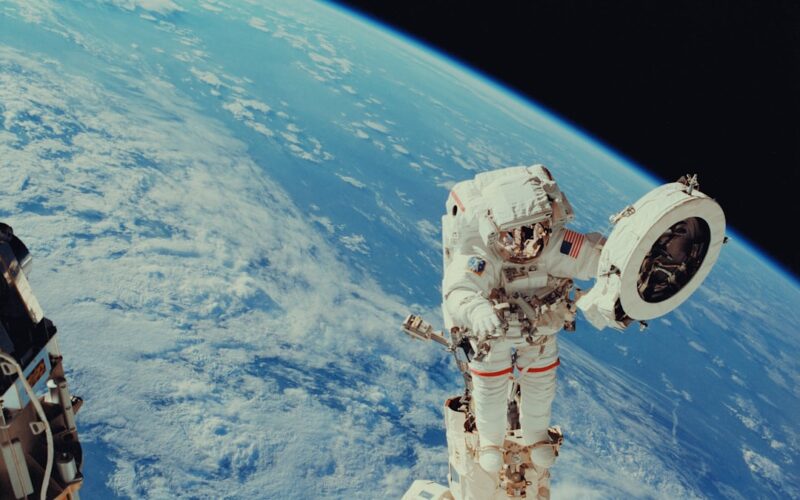
NASA’s Expedition 75 is officially underway aboard the International Space Station (ISS), and it’s shaping up to be an action-packed stretch for the crew. The agency has announced three spacewalks set for August, with the first scheduled for August 6. Maine-native and SpaceX crew commander Jessica Meir will don her suit for her sixth career extravehicular activity (EVA), teaming up with a flight engineer for a six and a half hour mission outside the station.
The upcoming spacewalks are more than your usual maintenance run. Astronauts, including Meir, will exit the ISS airlock armed with a tool bag designed for some pretty technical tasks. Top of the list: installing hardware to modify the station’s 3B power channel. This work lays the groundwork for the next-generation International Space Station Roll-Out Solar Array (IROSA) — a crucial upgrade that will boost the outpost’s power capabilities for years to come.
Upgrades Beyond Power: Communications and Research
But that’s not all. The crew will also tackle upgrades to the station’s space-to-ground antenna, a vital component used by NASA to transmit data and maintain high-speed communications with Mission Control in Houston. To help with these demanding jobs, astronauts often rely on the station’s robotic arm, which can lock in their feet and maneuver them to hard-to-reach spots on the sprawling structure.
Meanwhile, science aboard the ISS continues at full throttle. Bioprinting research—where living cells and tissues are manufactured using bioinks—remains a top priority. Thanks to microgravity, these tissues grow in three dimensions, resulting in higher-quality samples than what’s possible on Earth. Elsewhere, flight engineer Andrey Fedyaev recently put the Zvezda module’s treadmill to good use for a physical fitness assessment, followed by configuring radiation detection hardware to monitor the neutron environment and test materials for shielding future spacecraft.
Supporting NASA’s Lunar Ambitions
NASA officials have made it clear: these upgrades are essential for ISS operations and support ongoing missions as the agency looks toward returning astronauts to the moon as early as 2028. With high-stakes maintenance, pioneering research, and a focus on future exploration, Expedition 75 is a reminder that the ISS remains a testbed for humanity’s next giant leap.