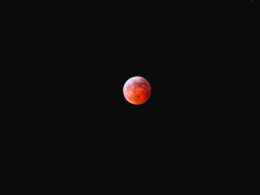




Skygazers, mark your calendars: this Thursday, December 4, the night sky will serve up the last supermoon of 2025, offering a spectacle that won’t repeat until 2042. Known as the “Cold Moon,” this December full moon is set to reach its peak brilliance at 6:14 p.m. EST, according to the U.S. Naval Observatory. For those in the Northern Hemisphere, the show starts just after sunset, as the moon climbs over the eastern horizon, painting snowy landscapes with its frosty-white glow.
Supermoons are special because they only happen three to four times per year, in clusters, when the moon’s orbit brings it closest to Earth (within 90 percent of its perigee, according to NASA). But this one’s a rare treat: it’s the third in a trio of supermoons for 2025 and the last we’ll see before a 17-year hiatus. If you miss it, your next chance isn’t until 2042.
The ‘Cold’ and ‘Long Night Moon’
December’s full moons go by many names, thanks to both cultural traditions and the season’s distinct character. The Farmer’s Almanac, drawing on Native American and colonial history, calls this the “Cold Moon,” fitting its spot on the calendar as winter tightens its grip. Some also refer to it as the “Long Night Moon,” a Mohican name, since it rises during the year’s longest nights and lingers higher in the sky well into the chilly hours.
Though it may look a bit larger and brighter, it can be tough to distinguish a supermoon with the naked eye—unless you know what to look for. You might notice the so-called “moon illusion,” a still-unexplained trick of our minds that makes the low-hanging moon appear enormous near the horizon. As astronomer William Alston from the University of Hertfordshire notes, this effect gets just a touch more striking on a supermoon night.
Tips for Viewing (and Photographing) the Supermoon
No fancy telescope required—this lunar spectacle is visible to anyone with a clear view of the sky. For best results, step outside right after sunset and look east as the moon rises. If you have binoculars handy, you’ll catch even more crisp details and sharpened shadows, especially as the moon bathes snow-covered landscapes in an ethereal glow. For amateur and professional photographers alike, this is a hot ticket: moonlight this bright can turn an ordinary winter scene into something almost magical.
Don’t forget, December is also packed with night sky wonders, including the approach of comet 3I/ATLAS, the Geminid meteor shower, and a conjunction between Jupiter and the moon. But Thursday’s Cold Moon supermoon is the main event—the final chance for this special lunar magic until 2042.