



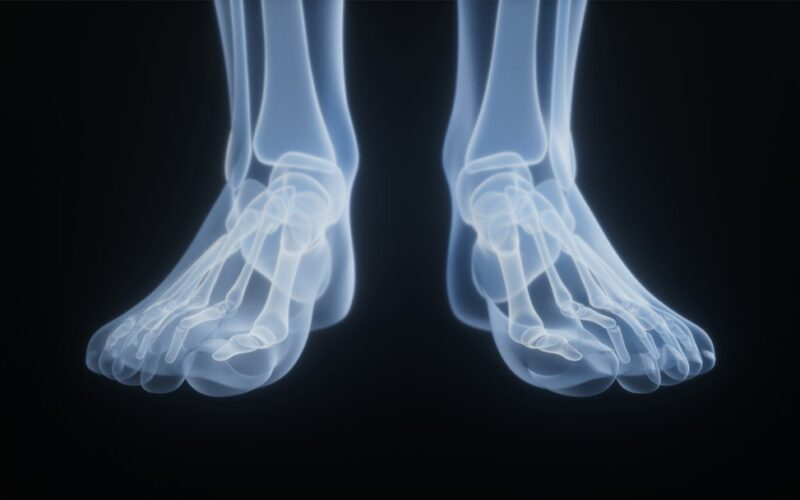
It turns out your choice of footwear does more than just complete your outfit—it may actually reshape your bones. A recent study out of the University of Chicago, published in the Journal of Anatomy on September 8, has found that wearing shoes for much of your life changes the internal structure of your ankle, leaving a lasting imprint on your skeleton.
Researchers used high-resolution micro-computed tomography (micro-CT) scans to examine the talus, a central weight-bearing bone in the ankle that connects the lower leg to the foot. They analyzed bones from 56 individuals: 40 who habitually wore shoes and 16 who typically went barefoot, including people from the Andaman Islands, southern Africa, and Central Africa.
Footwear Leaves Its Mark—Literally
The differences were striking. People who wore shoes had more trabecular bone—a spongy, supportive tissue—at the back and on the inside of the talus, toward the big toe. This suggests that wearing shoes, especially those with raised heels, shifts more weight to the back of the ankle, changing how physical forces are absorbed. In contrast, the barefoot group had more trabecular bone at the front of the talus, indicating their bones absorbed more force from flexing forward, possibly from squatting or climbing.
Lead researcher Dr. Farrell described the clear distinctions in bone structure as “a very nice surprise.” The findings suggest that our skeletons are far more adaptable than we might think, responding to the ways we move—and even to what we wear on our feet.
Implications for Human Evolution and Modern Health
These discoveries carry weighty implications beyond the shoe rack. For scientists studying human evolution, the results call into question the practice of using modern, shoe-wearing humans as direct references for how our ancestors walked. Early humans, who went barefoot, likely distributed their weight differently—something now visible in fossilized ankle bones.
There are modern health implications, too. The way footwear redistributes pressure across the foot and ankle may help explain why certain foot conditions, like metatarsalgia or osteoarthritis, are linked to shoe type and fit. As our bones adapt to the demands we place on them, our footwear choices could be quietly shaping our skeletons over a lifetime.
So next time you slip on your favorite shoes, remember: you’re not just making a fashion statement—you’re leaving a footprint in your bones.