



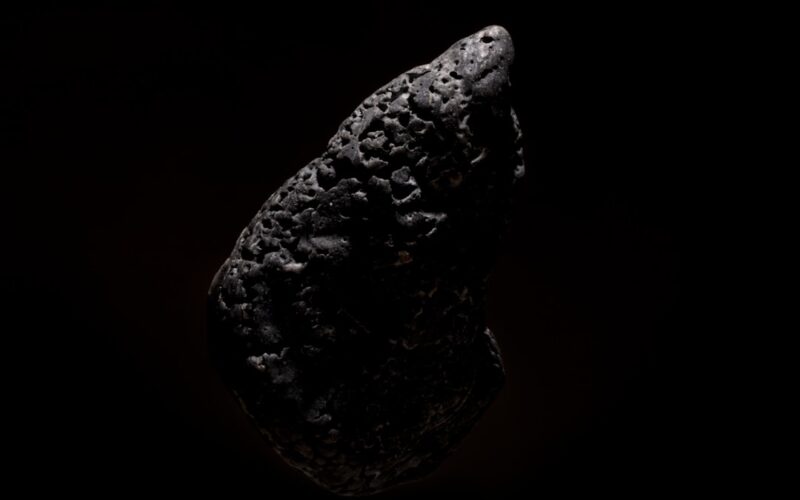
Move over, ‘Oumuamua—the solar system has a new cosmic oddball. The interstellar comet 3I/ATLAS (formally C/2025 N1), now sailing through our neighborhood, is giving astronomers a galactic riddle they can’t ignore. A parade of high-resolution images snapped in late 2025 has revealed that 3I/ATLAS isn’t like your standard fuzzy snowball from the outer solar system. Instead, it flaunts a sharply bounded, bright central core surrounded by uneven, directional swathes of light and luminous points that stick close to the primary mass. In plain terms: this thing looks far more “put together” than a typical comet, stubbornly refusing the chaotic break-apart behaviors we expect.
Wobbling Jets and an Anti-Tail: The Unprecedented Details
Scientists have documented rare “wobbling” jets emerging from 3I/ATLAS’s sun-facing anti-tail—a feature that’s essentially the comet’s version of a tail, but pointed toward the Sun rather than away. These jets, observed in a detailed forensic analysis, appear to wobble roughly every 7 hours and 45 minutes, hinting at rotational dynamics that are neither completely regular nor entirely chaotic. What’s even stranger: the more conventional comet “ion tail,” shaped by the Sun’s magnetic field, is missing in action. So is the usual fan of dust, replaced by these ordered structures.
This odd behavior isn’t just a first for interstellar comets—it’s rare even among the solar system’s usual suspects. Outgassing jets like these have only been seen wobbling in our local cometary visitors, but astronomers had never caught one at work in an interstellar visitor until now. The data isn’t suggesting 3I/ATLAS is a misidentified member of some known comet family; with no signs of fragmentation or random mass shedding, the experts say it can’t be cleanly squeezed into any current cometary or asteroidal box.
Ongoing Skywatching and the Road Ahead
After its temporary disappearance behind the Sun in October, NASA confirmed 3I/ATLAS became observable again from Earth on October 31, 2025. Skywatchers can now spot it in the pre-dawn sky and are expected to have telescope access to this cosmic interloper into spring 2026. Don’t expect Hollywood-style spectacle—think “faint fuzz” in your eyepiece, not a sky-spanning tail.
The recent findings are forcing scientists to rethink established models of comet evolution and interstellar debris. The Vera C. Rubin Observatory, equipped with a game-changing 3,200-megapixel camera, is poised to blow the doors open on interstellar comet detection. Early simulations suggest we could spot up to 50 similar objects over its ten-year mission. Each one, like 3I/ATLAS, will offer a tantalizing chance to rewrite textbook “comet physics”—especially as they arrive from realms beyond our Sun’s familiar light.
Scientists warn that it’s too early to declare the true nature of 3I/ATLAS. But one thing is clear: the more we see, the more the universe insists on surprising us.