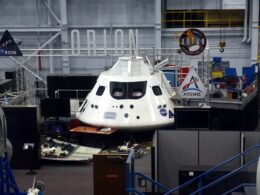





NASA reached a significant milestone in its quest to return humans to the Moon. On February 20, 2026, engineers at Kennedy Space Center completed the Artemis II wet dress rehearsal—a full-scale, launch-day simulation for the Space Launch System (SLS) rocket and Orion spacecraft. The exercise ended precisely as planned at T-minus 29 seconds in the countdown, with no major issues reported.
This multi-day test involved fueling the SLS rocket’s massive 212-foot core stage, running through countdown procedures, and closely monitoring critical systems like tank levels, pressure, and valve performance. Notably, NASA teams managed to keep hydrogen leak concentrations below safety limits throughout the exercise—an achievement, given that a similar test for Artemis I in 2022 was delayed by six months after hydrogen leaks were discovered. During the first Artemis II rehearsal earlier this month, a hydrogen leak again caused the mission’s launch to slip at least a month, but this latest trial went smoothly.
Final Steps Before Launch
The rehearsal, conducted at Launch Complex 39B under the glow of a full Moon, is the last major test before Artemis II’s crew can blast off. NASA’s launch director Charlie Blackwell-Thompson gave the go-ahead for the final “terminal count” on Thursday evening, capping off hours of meticulous procedures. The launch abort system—designed to pull the crew to safety if needed—was enabled five minutes and 25 seconds before the simulated launch time of 8:42 p.m. ET.
With the successful completion of this test, NASA will now review the data to determine if Artemis II can proceed with a targeted launch as early as March 6, 2026. The agency has stated it will “not set a formal launch date until after a successful rehearsal and data reviews,” but officials have expressed optimism for a spring departure. A news briefing is scheduled for Friday morning to discuss the results and next steps.
Astronaut Crew Ready for Lunar Flyby
Artemis II will mark the first time since the Apollo era that astronauts travel beyond low Earth orbit. The crew—Commander Reid Wiseman, Pilot Victor Glover, Mission Specialist Christina Koch (all NASA), and Mission Specialist Jeremy Hansen from the Canadian Space Agency—will embark on a ten-day journey around the Moon and back. While this mission won’t land on the lunar surface, it will pave the way for Artemis III, which aims to put astronauts back on the Moon in 2028.
As NASA edges closer to launch, the Artemis II crew is expected to enter quarantine this week after nearly three years of training. Their mission—riding atop the 322-foot SLS rocket and powered by engines and thrusters from companies like L3Harris and Blue Origin—will test all systems in preparation for humanity’s long-awaited return to the lunar surface.