




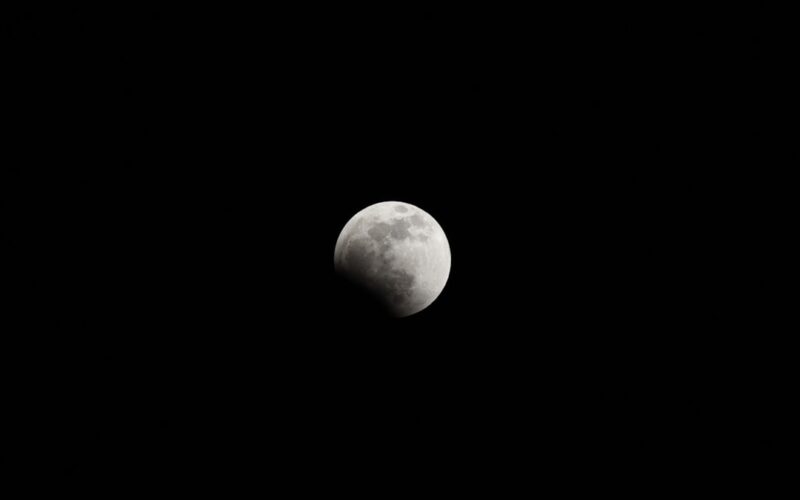
Skywatchers, get ready for a cosmic spectacle: on the night of August 27–28, 2026, a deep partial lunar eclipse will darken 96% of the full sturgeon moon. This event, classified by NASA as a “deep partial lunar eclipse,” will unfold over 5 hours and 38 minutes and will be visible to about 3 billion people—roughly 44% of the world’s population.
The eclipse kicks off on Thursday night, August 27, for viewers in the United States, with the moon gliding into Earth’s shadow starting at 9:23 p.m. ET. The partial phase—when the most dramatic darkening occurs—begins at 10:33 p.m. ET, reaching its peak at 12:12 a.m. EDT (04:12 UTC) on August 28. On the West Coast, the show starts at 6:23 p.m. PDT, peaks at 9:12 p.m., and the entire event wraps up just after midnight. Across the Atlantic, observers in the UK and much of Europe can catch the eclipse before dawn on August 28.
How and Where to Watch the Eclipse
Pretty much anyone on the night side of Earth with clear skies and the moon above the horizon can catch at least part of this lunar shadow play. The eclipse will be completely visible across the entire United States—from the East Coast to the West Coast. In North and South America, Africa, and Europe, sky-gazers will have front row seats as Earth’s shadow covers nearly all of the moon, leaving only a sliver bathed in sunlight.
The entire eclipse lasts from 01:23 to 07:01 UTC (that’s 9:23 p.m. to 3:01 a.m. ET), with the partial phase stretching from 02:33 to 05:52 UTC. The moon will never entirely disappear; instead, it will take on a striking, almost blood-red hue as it moves through Earth’s umbra, creating a near-total effect that’s especially photogenic for astrophotographers.
A Rare August Sky Show
This near-total lunar eclipse wraps up a remarkable August for skywatchers, following two major eclipses and the annual Perseid meteor shower. For many in the U.S., it’s the second lunar eclipse visible nationwide in 2026—a rare treat. Astronomer Catherine Pilachowski of Indiana University Bloomington noted, “We’ll be on the night side of the Earth when it happens and be able to see it.”
So, if you’ve got a clear view and maybe a pair of binoculars or a camera handy, don’t miss this chance. The universe, as one skywatcher put it, invites us on an adventure every night—sometimes, all you need to do is look up.